

A leading Philippine Church official has called for stronger solidarity with Indigenous Peoples (IPs) and condemned what he described as the country’s “ignore-ance” of their cultures, struggles, and rights.
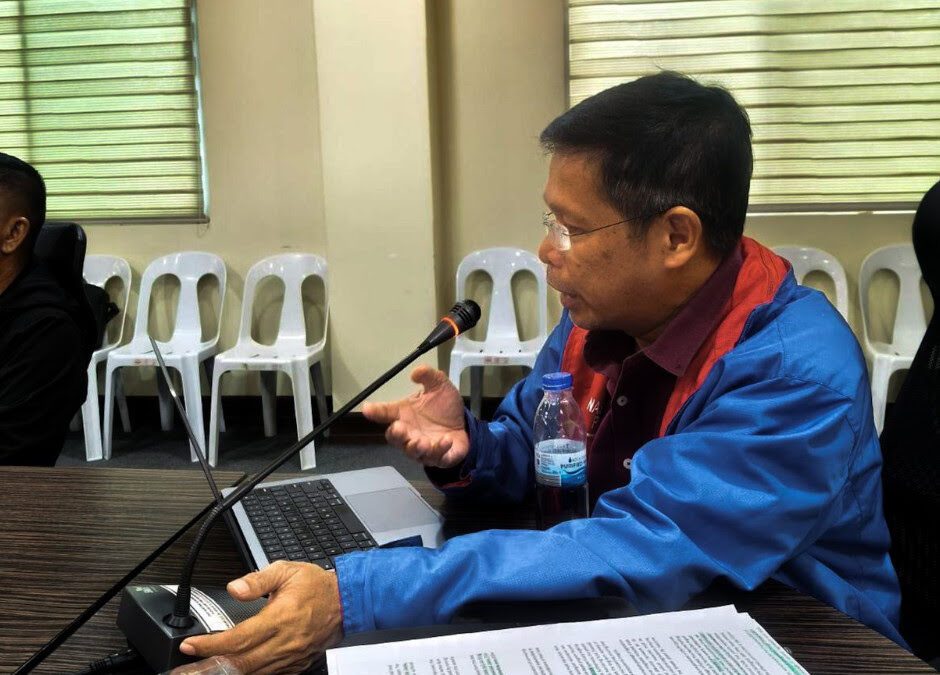
Speaking at the International Day of the World’s Indigenous Peoples forum on August 9 at the Maryhill School of Theology, Bishop Gerardo Alminaza of San Carlos said the marginalization of IPs is not due to a lack of awareness but an active choice to disregard them.
“Our problem in Negros is like most of the Philippines, or even the world. It isn’t ignorance—a word with Latin roots meaning not knowing. We know IP cultures exist. It is ‘ignore-ance,’ or ignoring,” he said.
“We ignore—a word that has developed to mean that we intentionally disregard something or someone. We have evolved from a state of not knowing to an active choice of not acknowledging,” he added.
Alminaza, vice president of Caritas Philippines, said Indigenous Peoples remain marginalized as their cultures are disregarded for the advantage, gain, and comfort of the majority.
The prelate noted that globally there are about 476 million Indigenous Peoples belonging to 5,000 cultures in over 90 countries — less than 6% of the world’s population but accounting for at least 15% of the world’s poorest.
In the Philippines, there are 110 ethnolinguistic groups, estimated at around 14 million people, or more than 10% of the population, though the 2020 census had an “error in ethnic identification.”
They are spread across the country, with 63% in Mindanao, 34% in Luzon, and 3% in the Visayas. On Negros Island alone, at least five ethnic groups are present: the Ati, Ata, Ituman Bukidnon, Magahat Bukidnon, and Carol-anon Bukidnon.
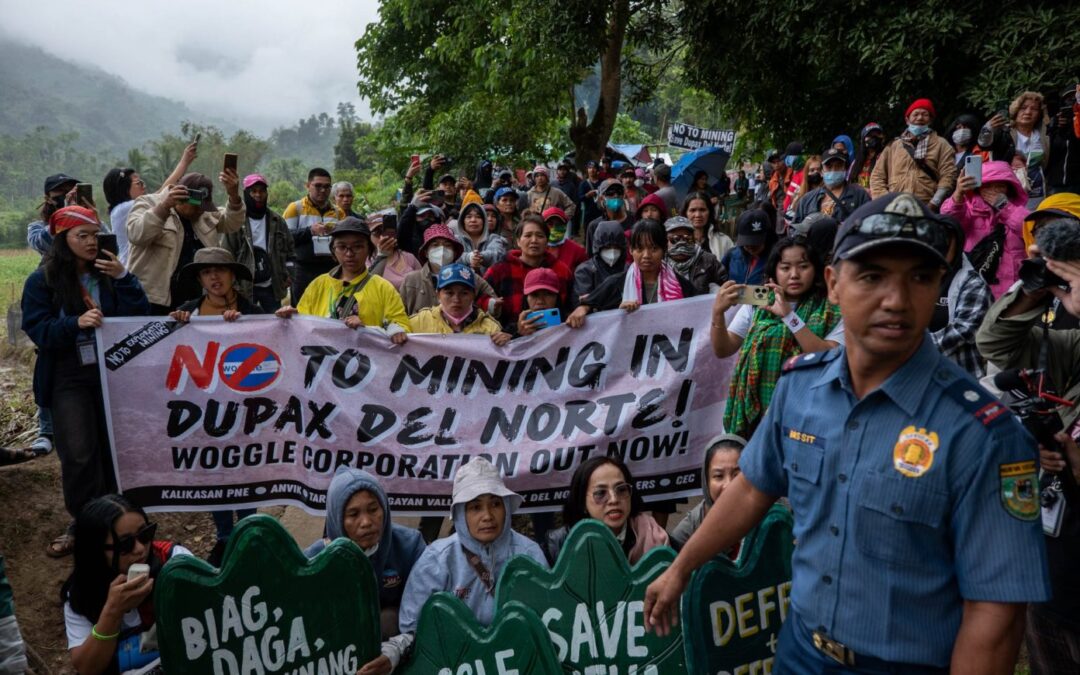
The bishop warned of the impacts of “development aggression and plunder,” citing data from Indigenous Peoples alliance Katribu: nearly half — 49% or 449,576.81 hectares — of the total mining projects in the country overlap with or are within ancestral domains.
He said five energy development priority projects under the Marcos administration’s “Build Better More” program are located within ancestral lands, covering 143,000 hectares. In the Cordillera, 101 hydropower projects are lined up or installed, while other dam projects span the country.
At least 320,000 hectares of ancestral lands are controlled by large, local, and foreign corporations for monocrop plantations of banana, pineapple, oil palm, bioethanol, and coffee, displacing or adversely affecting Indigenous communities, especially in Mindanao.
Alminaza also cited a shift in government forestry policy that favors corporations managing up to 40,000 hectares, some overlapping ancestral domains, as well as increasing palm oil plantation agreements such as the one in Candoni, Negros, with Hacienda Asia Plantation Inc. (HAPI).
Tourism projects, he added, also threaten land dispossession — from the Molbog and Cagayanen in Bugsuk, Palawan facing San Miguel Corporation’s luxury resort plans, to the Ayta in Central Luzon against Clark Development Corporation and Bases Conversion Development Authority, and the Ati in Boracay against multiple claimants.
He lamented that many Indigenous groups “are ignored as they wait for years and decades to secure their Certificates of Ancestral Domain Titles” and that Indigenous representation in local government units often “goes unimplemented.”
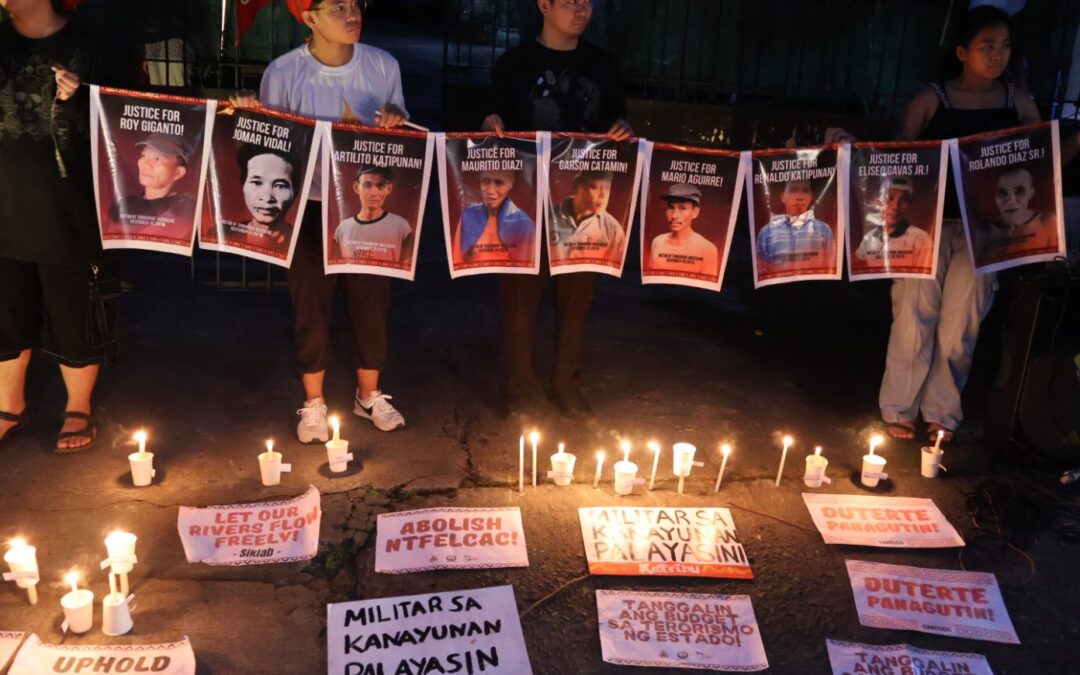
Alminaza also denounced the worsening militarization in Indigenous areas, citing harassment, surveillance, red-tagging, aerial bombings, and the destruction of Lumad schools.
“There are places in the Philippines where rising in resistance is very difficult these days,” he said, pointing to “the control of LGUs by NTF-ELCAC (National Task Force to End Local Communist Armed Conflict)” as one of the factors that “make defending the rights of poor communities very difficult.”
Save Our Schools in Mindanao has reported 21 Lumad schools destroyed, 10 incidents of aerial bombing, and Lumad children criminalized. “This is not just injustice—it is a spiritual wound,” the bishop said.
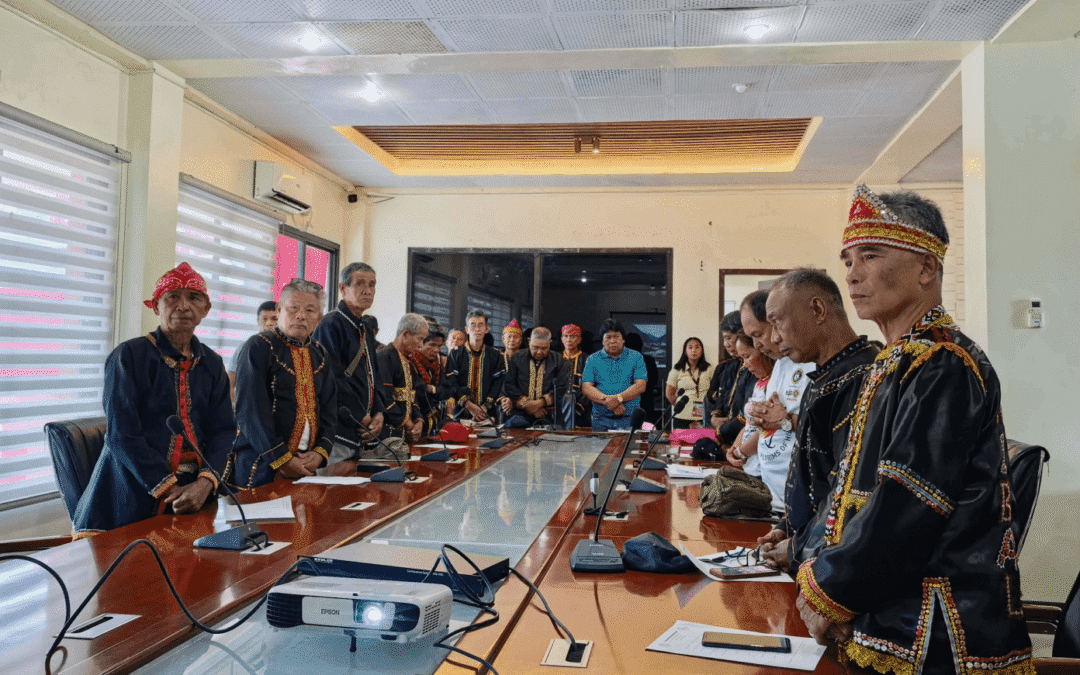
Despite the challenges, the bishop vowed to stand with Indigenous communities, particularly those in his home province.
“We will stand with our IP neighbors!” he declared, noting his role as elected chair of the Wisdom Council of the Negrosanon Initiative for Climate and the Environment (NICE), which is supporting Magahat farmers in Candoni in their struggle against HAPI.
He called for sustained advocacy for Indigenous Peoples, environmental defenders, and those facing persecution, emphasizing that solidarity must extend to the red-tagged, the unjustly detained, the disappeared, and their families, and all who protect the environment and defend the land.
He stressed that hope requires discipline, deliberate action, and unity, urging everyone to make marginalized communities visible and to keep working together.
Photo by: Jire Carreon
0 Comments