

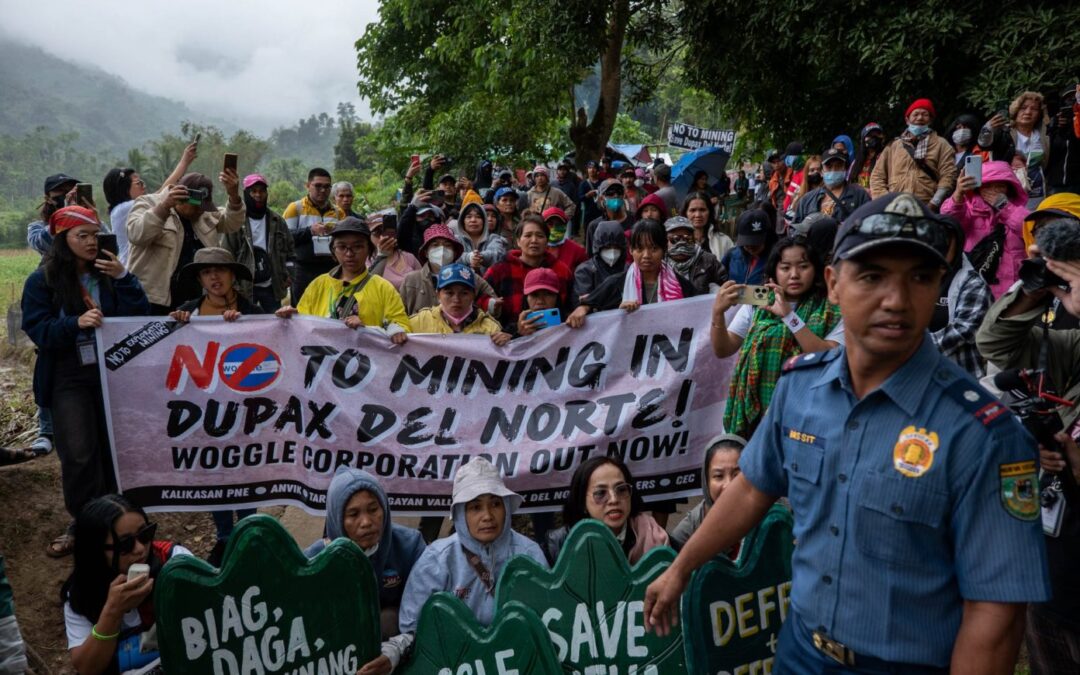
Church leaders, environmental advocates, and local government officials in Mindoro have reaffirmed their opposition to large-scale mining, following a Supreme Court ruling that nullified provincial ordinances banning such operations on the island.
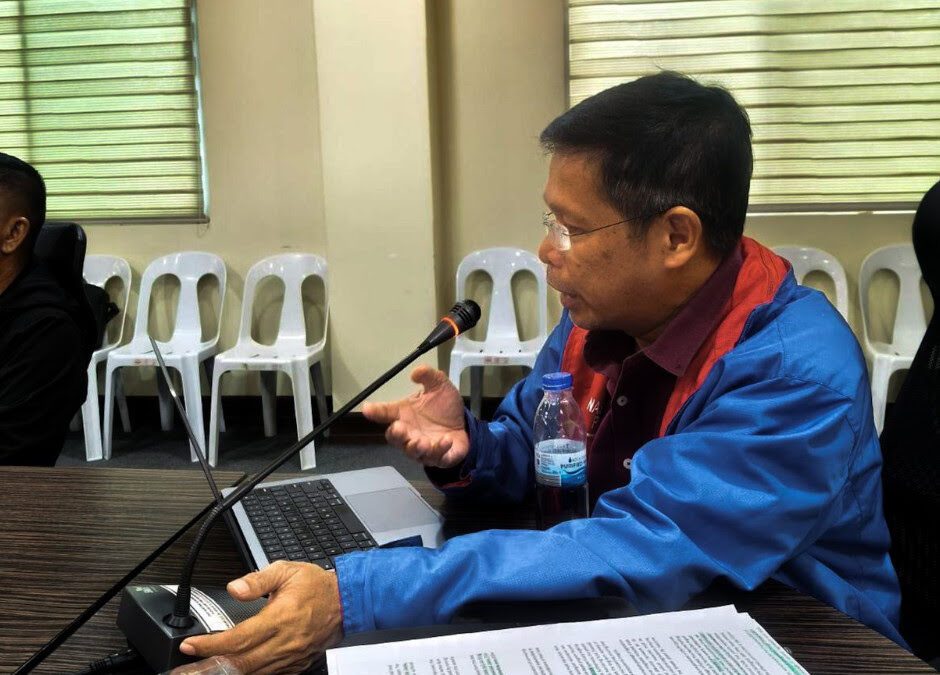
In a forum held July 10 at the Bishop’s Residence in Calapan City, participants from the Church, civil society organizations, and local and provincial governments gathered to assess the legal implications of the decision and explore coordinated action to protect the island’s ecosystems and communities.
Fr. Edwin Gariguez, executive director of the Diocesan Social Action Center and long-time environmental advocate, called the struggle against mining both a moral and pastoral obligation.
“The cry of the Earth is the cry of the poor,” Fr. Gariguez said, quoting Laudato Si’. “This struggle is not just ecological or political—it is pastoral and moral. We are called to defend life in all its forms.”
The Supreme Court ruling, which voided the mining moratorium ordinance of Occidental Mindoro, has raised concerns in Oriental Mindoro, where applications for large-scale mining, including one covering over 46,000 hectares by Agusan Petroleum and Mineral Corporation, are pending.
Fr. Gariguez said the decision, while a setback, does not eliminate legal options for local resistance. He pointed to existing provisions under the Local Government Code that require consultation and local approval for environmentally critical projects.
“This decision may have nullified the moratorium ordinances, but it has not erased our mandate,” he said. “Local governments are still empowered to assert environmental safeguards—through consultation, local legislation, and informed consent.”
He urged local councils to pass specific, science-based ordinances protecting critical ecosystems and ancestral domains, describing these as “defensible legal shields.” He also emphasized the need to reinvigorate grassroots organizing and public education campaigns.
“Empowered citizens are the most reliable stewards of their land, forests, rivers, and marine ecosystems,” he said.
Fr. Gariguez also reiterated support for national legislation such as the Alternative Minerals Management Bill and the Rights of Nature Bill, calling them necessary steps toward a “rights-based and ecologically sound” approach to governance.
Environmental lawyer and former Ateneo School of Government dean Antonio La Viña, the forum’s keynote speaker, encouraged local officials not to lose hope following the court decision.
“Mining can be regulated and opposed if it has harmful effects on land,” La Viña said. “We do not prohibit, but we regulate. Don’t lose hope. LGUs are powerful enough to create mechanisms to regulate and stop destructive projects.”
Oriental Mindoro Governor Humerlito Dolor, Occidental Mindoro Governor Eduardo Gadiano, and Oriental Mindoro First District Representative Arnan Panaligan were present and collectively reaffirmed their opposition to large-scale mining on the island.
At the forum, Bishop Moises Cuevas of the Apostolic Vicariate of Calapan appealed for unity beyond politics in the face of shared environmental threats.
“We can still act together, even if we come from different political backgrounds and parties—because there are things that are essential,” Bishop Cuevas said. “We can choose charity in all things, as a commitment to the common good, especially for the land and the people we all serve.”
The prelate expressed hopes that the forum would not be just “for slogans, for show, or for debate, but a space to listen, to discern, to learn, to pray, and to make room for one another’s voice.”
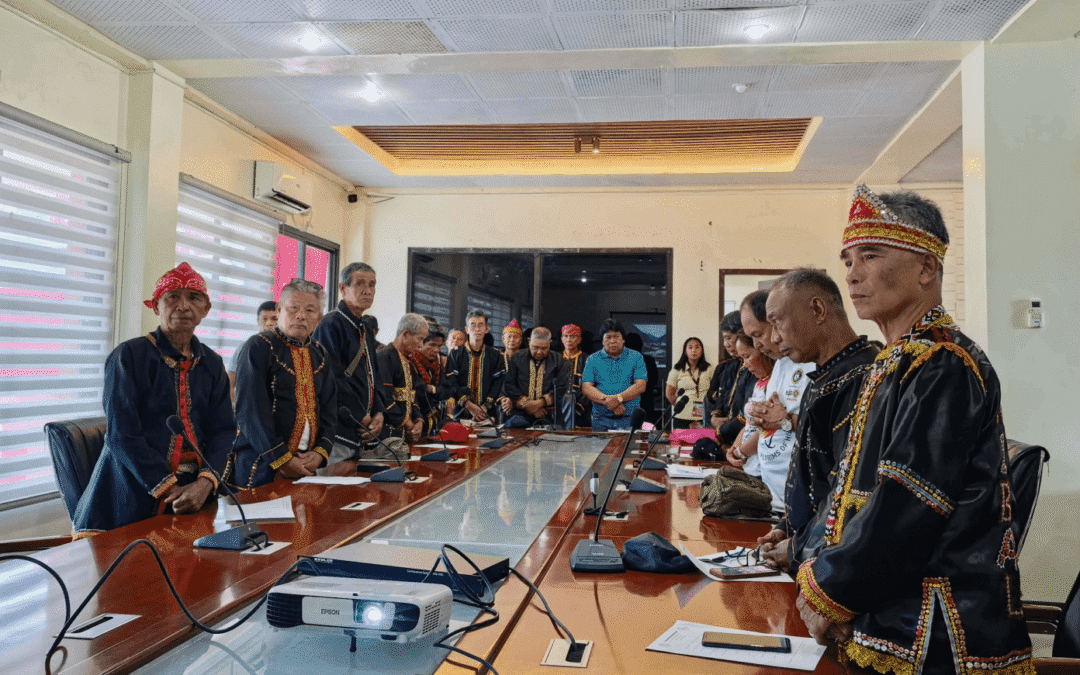
Participants in the forum included barangay officials, Indigenous community leaders, youth advocates, environmental NGOs, local clergy, and representatives from both the Apostolic Vicariates of Calapan and San Jose.
The gathering ended with a renewed call for strengthened partnerships between the Church, civil society, and government to uphold environmental protection, social justice, and the rights of local communities amid legal and political uncertainty.

0 Comments