

A new report warned that nickel mining in the Philippines is worsening climate risks and fueling rights abuses in communities caught in the country’s push to supply the world’s clean energy industries.
The 106-page study, titled “Broken Promises: Philippines Nickel Mining Causes Rights Abuses and Increases Climate Vulnerability,” was released by Climate Rights International (CRI) on Tuesday.
It details how large-scale mining in the Caraga Region—especially in Dinagat Island and Surigao del Sur—is stripping forests, contaminating rivers, and threatening food security, while environmental defenders face attacks and criminalization.
“Nickel is important for the transition to renewable energy, but in the Philippines, nickel mining is destroying fishing and farming livelihoods, creating food insecurity, and causing noxious pollution of drinking water,” said Krista Shennum, researcher at CRI.
“Environmental and human rights defenders face attacks, criminalization, and even death for speaking out,” she added.
The report said nickel operations are “making local communities more vulnerable to climate impacts, including extreme weather events” by driving “deforestation and the loss of species that provide climate resilience, such as terrestrial and mangrove forests.”
Residents of Tubajon in Dinagat Island told researchers that mining-related siltation has worsened flooding and storm surges since Super Typhoon Odette in 2021.
In Surigao del Sur, fisherfolk said water pollution has devastated nearshore fisheries.
“The seas are now more dangerous and rougher than before. I guess maybe it’s climate change,” said Crisologo Anino, a fisherman from Ayoki Island.
“We could compensate for rough weather because we could just fish nearby. Mining impacts us hard because we have to go farther out [because of the pollution]. It’s much harder now,” Anino added.
The group said the destruction of coastal ecosystems and farmlands has pushed many families deeper into poverty.
“It is now hard to feed my family. We are hungry most of the time,” said Analiza, a mother of four from Tubajon. Residents also reported polluted drinking water, skin and respiratory ailments from mine dust, and frequent flooding of rice fields “from mining choked rivers.”
Jaybee Garganera, national coordinator of Alyansa Tigil Mina, said communities across the country are paying the price for the government’s dependence on extractive industries.
“We reject the dominant narrative that attaining the clean energy transition requires more extractivism and open up more of our forests and indigenous lands, a reality captured by this report,” Garganera said.
Garganera stressed that for “responsible mining” to happen, “there must be a clear path of benefits to the host communities in particular and the Philippines in general, without harming the environment and lives of affected peoples.”
“Our rejection of this narrative is based on the evidence that we are creating sacrifice zones in the name of profiting from nickel mines and other transition minerals,” he added.
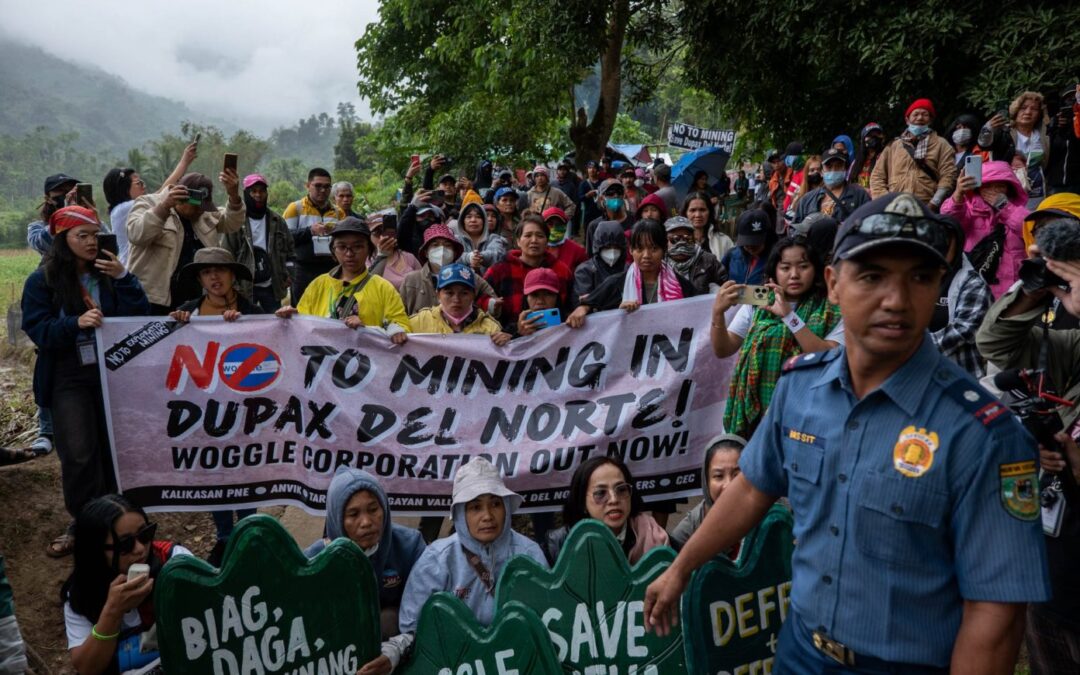
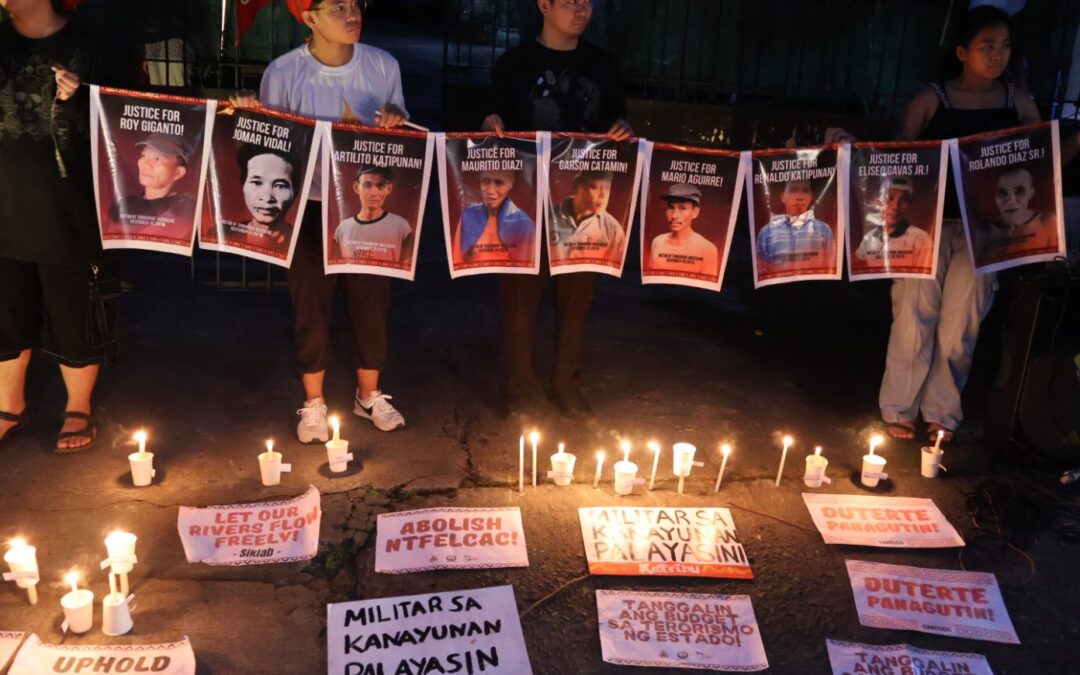
CRI described the Philippines as “the most dangerous country in Asia to be a land and environmental defender.” It documented cases of harassment, red-tagging, and Strategic Lawsuits Against Public Participation (SLAPPs) targeting those who oppose mining.
According to Indigenous Peoples Rights International (IPRI), this pattern of abuse extends beyond the Philippines.
Across Asia, IPRI recorded 459 allegations of human rights violations, criminalization, and violence against Indigenous Peoples since 2021.
Of these, 24 cases were tied to Just Energy Transition projects in Indigenous territories, affecting an estimated 97,217 Indigenous individuals.
The organization said 18 of these cases involved hydropower projects in the Philippines, India, and Nepal, while others were linked to solar, geothermal, wind, and transition-mineral mining projects in the Philippines, Indonesia, Cambodia, and India—illustrating how “clean energy projects” are increasingly being pursued at the expense of Indigenous rights.
“People living in mining communities are facing significant harms from powerful companies who act with almost total impunity,” Shennum said.
Shennum said the Philippine government, as one of the countries most vulnerable to the climate crisis, must hold mining companies accountable and ensure the nickel industry does not worsen the impacts of climate change on local communities.
The group called on the Department of Environment and Natural Resources (DENR) and the Mines and Geosciences Bureau (MGB) to “fully enforce and strengthen laws and regulations to minimize the impacts of nickel mining on communities,” and to halt new mining permits “until the industry meets domestic and international environmental standards.”
CRI also urged electric vehicle (EV) and battery manufacturers to use their market leverage to clean up supply chains.
“Electric vehicle and battery companies have unique leverage to demand that the mining industry cleans up its act,” Shennum said.
She said electric vehicle companies that claim leadership in the global fight against climate change should use their influence to ensure their nickel suppliers uphold community rights and stop environmentally destructive practices.
The report said that the Philippines’ nickel carries a hidden cost borne by poor rural and Indigenous communities.
Without urgent reforms and corporate accountability, CRI said, the country’s role in powering the green transition will remain built on deforestation, displacement, and fear.
0 Comments